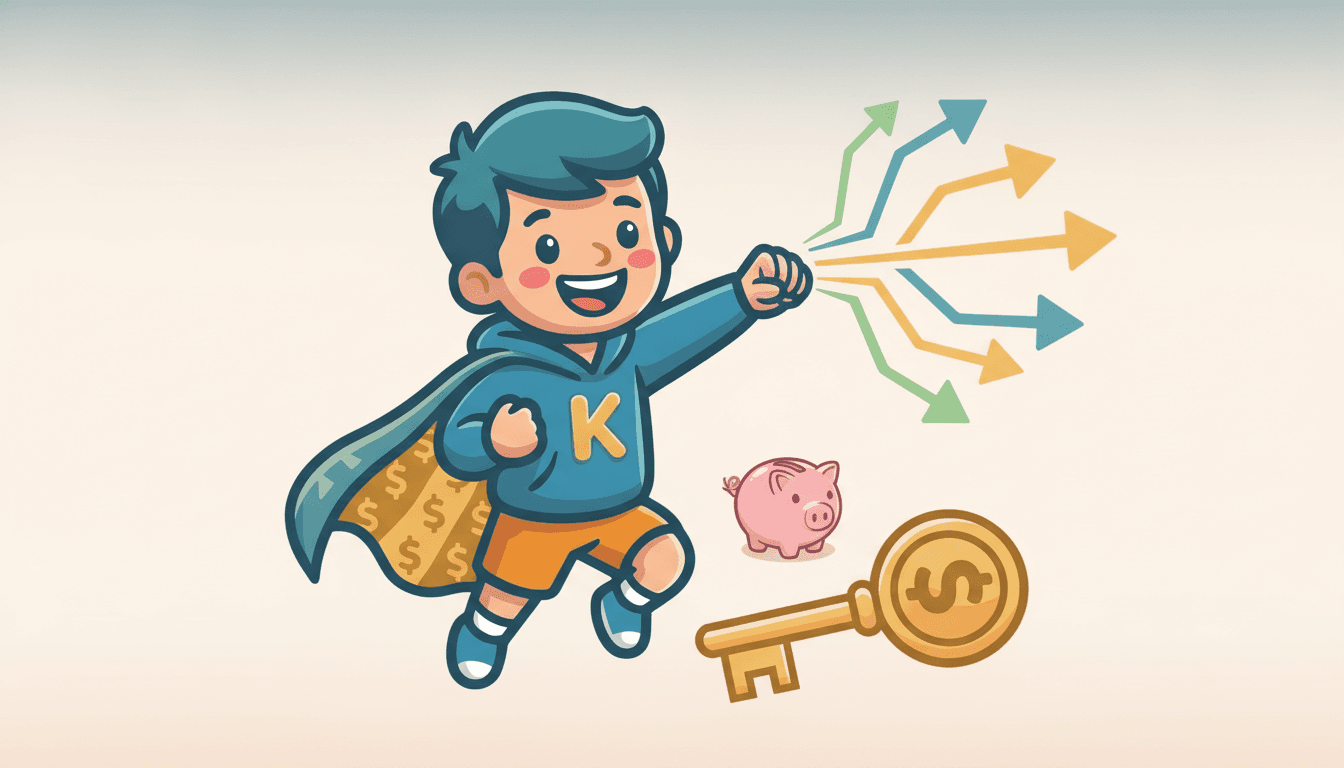
Greenspan's Legacy: How Choices Shape Your Future Money
Alan Greenspan, a famous economist, passed away at 100. Learn how his choices, and yours, affect your financial future.
Inspired by: Alan Greenspan, economist and longtime head of the Federal Reserve, dies at 100 - NBC News
Today, news outlets like NBC News are reporting the passing of Alan Greenspan, a very important economist who lived to be 100 years old. He used to be in charge of the Federal Reserve, which is like the "central bank" of the United States. Think of it as the boss of all the big banks, and it helps decide how much money is flowing in our country. Greenspan made big decisions that affected everyone's money, from the price of your parents' house to how much interest you might earn on your savings account.
Now, you might be thinking, "What does an old economist have to do with my allowance or saving for a new video game?" A lot, actually! Greenspan's long life and career show us something super important about money: the power of choices, and how those choices can have a really long-lasting impact.
Your Choices, Your Future
Greenspan made huge decisions that affected the entire country's economy for decades. But even small choices you make every day about your money have a big impact on your future.

Let's say you get $10 for your allowance. You have choices:
- Spend it all now on candy and a toy. Instant fun!
- Save some for that bigger LEGO set or game you really want.
- Invest a tiny bit (with your parents' help, of course!) in something that might grow over time.
Each of those choices leads to a different outcome. Spending it all means no big LEGO set later. Saving means delaying some fun now for bigger fun later. Investing (even just a dollar!) is like planting a tiny money tree that could grow into a bigger one.
The Long Game of Money
Greenspan was involved in economic policy for many, many years. This reminds us that money isn't just about what happens today or tomorrow. It's often about the "long game."

Think about saving for college, or even just a new bike. If you start saving a little bit each week, those small amounts add up over months and years. It's like a tiny snowball rolling down a hill, getting bigger and bigger as it goes. If you wait until the last minute, it’s much harder to reach your goal.
Greenspan's job was to think about the economy not just next week, but next year, and even five or ten years from now. He had to consider how his decisions would affect inflation (how much things cost), jobs, and growth. You can do the same with your own money goals!
Learning from History
When big figures like Alan Greenspan pass away, it's a chance to reflect on their impact and what we can learn. For Greenspan, it's a reminder that money isn't just numbers on a screen; it's about people, choices, and how those choices shape our lives and the world around us.
You might not be running the Federal Reserve, but you are in charge of your own mini-economy: your allowance, your savings, and how you choose to spend. Every decision you make, no matter how small, is a step on your financial journey. By making smart choices today, you're setting yourself up for a stronger financial future, just like Greenspan aimed to do for the country.
P.S. This week, talk with your child about a specific long-term savings goal they have. Help them break it down into smaller, achievable weekly or monthly savings targets, and track their progress together.
Stay in the loop
We ship new free guides, printables, and the occasional deal — roughly twice a month. No spam, unsubscribe anytime.
Three streams available: 30-day welcome series, biweekly newsletter, and (opt-in) daily blog posts. Pick which you want after signing up. One click to unsubscribe from any.