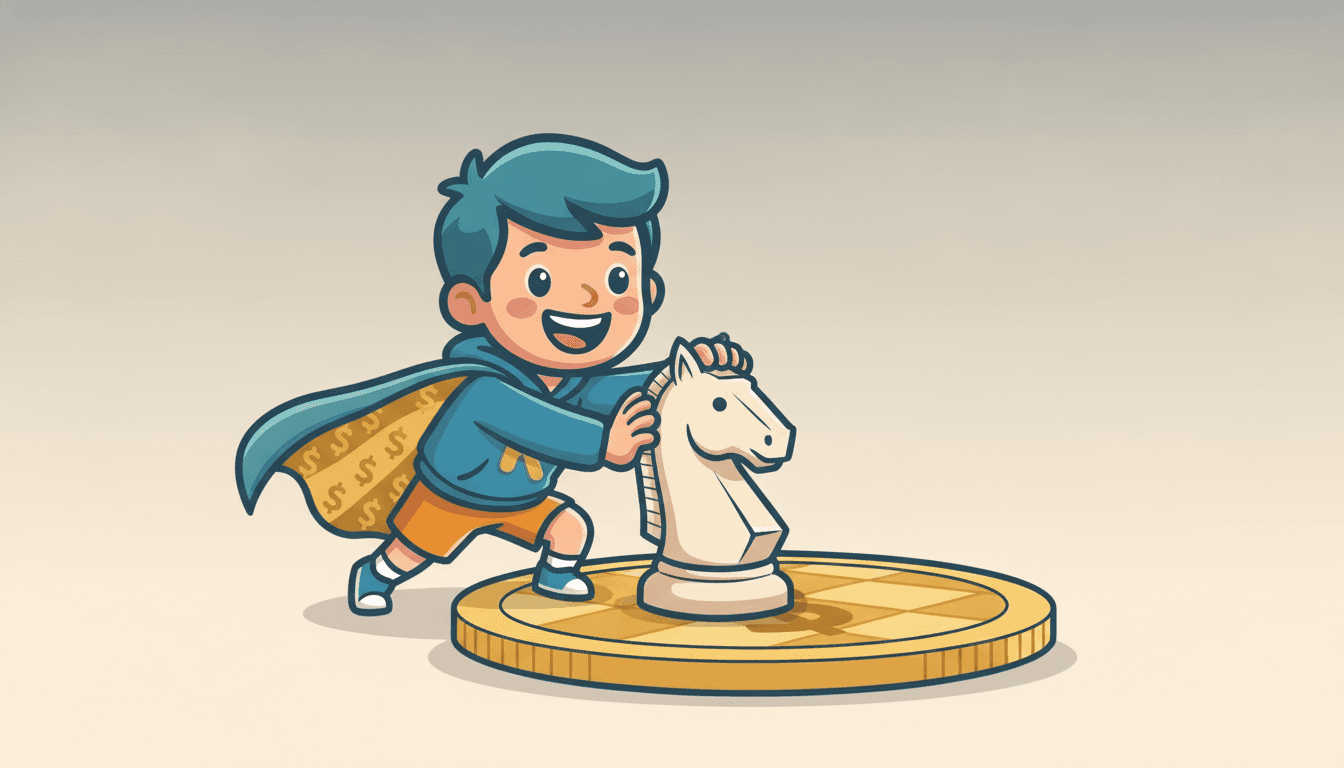
Level Up Your Money Skills with Game Thinking!
Chess-inspired roguelike games are trending! Discover how strategic thinking in games can help kids make smart money moves in real life.
Inspired by: IBM debuts sub-1 nanometer chip technology
Have you ever played a game where every move matters? Maybe it's chess, where you have to think several steps ahead, or a video game where one wrong decision can mean "Game Over!" Right now, there's a lot of buzz online about a new "Chess-Inspired Roguelike" game. These kinds of games are all about strategy, making choices under pressure, and learning from your mistakes. And guess what? Those same skills are super useful when it comes to managing your money!
What's a Roguelike, Anyway?
If you haven't heard of them, roguelike games are usually pretty tough. You start with limited resources, explore a randomly generated world, and when your character "dies," you usually have to start all over again from the beginning. It sounds frustrating, but it teaches you to be really careful, to plan, and to adapt. Chess adds another layer, making every move a strategic decision, like moving a pawn to protect your king or sacrificing a knight to gain a better position.
Money is a Game of Strategy
Think about it: saving money, spending wisely, and reaching financial goals are all a bit like playing a game.
- Limited Resources: Just like in a roguelike where you only have so much health or so many potions, you only have so much money. You can't buy everything you want, right? You have to decide what's most important.
- Strategic Moves: When you get your allowance or earn some money, what do you do with it? Do you spend it all right away on candy, or do you save some for that cool new video game you really want? Saving is like making a strategic move that pays off later.
- Learning from Mistakes: Maybe you bought a toy that broke the next day, and you regretted not saving for something more durable. That's okay! In games, you lose, you learn, and you try a different strategy next time. The same goes for money. Every time you make a less-than-perfect spending decision, it's a chance to learn for the future.
Planning Your "Moves"
In chess, you don't just move a piece without thinking. You consider what your opponent might do, and what your next few moves will be.
- Short-term vs. Long-term: Maybe you have enough money to buy a small treat today. That's a short-term win. But if you save that money, and add to it, you might be able to buy a bigger, more exciting item next month. That's a long-term strategy!
- Budgeting is Your Board: A budget is like your game board. It shows you how much money you have and helps you plan where each "piece" of your money should go – some for saving, some for spending, maybe some for charity.
- Unexpected Challenges: Sometimes in games, something unexpected happens – a monster appears, or a trap is sprung. In real life, unexpected things can happen with money too, like needing to replace a lost school supply. Having a little "emergency fund" saved up is like having an extra life or a powerful spell in a game – it helps you deal with the unexpected!
So, next time you're playing a strategic game, remember that you're not just having fun. You're actually practicing important skills that will help you become a money master in real life. Every decision you make, big or small, is a move on your personal financial chessboard.
P.S. This week, challenge your kids to think about a specific money goal they have. Then, help them map out two or three "moves" they can make to reach that goal, just like planning moves in a game.
Stay in the loop
We ship new free guides, printables, and the occasional deal — roughly twice a month. No spam, unsubscribe anytime.
Three streams available: 30-day welcome series, biweekly newsletter, and (opt-in) daily blog posts. Pick which you want after signing up. One click to unsubscribe from any.