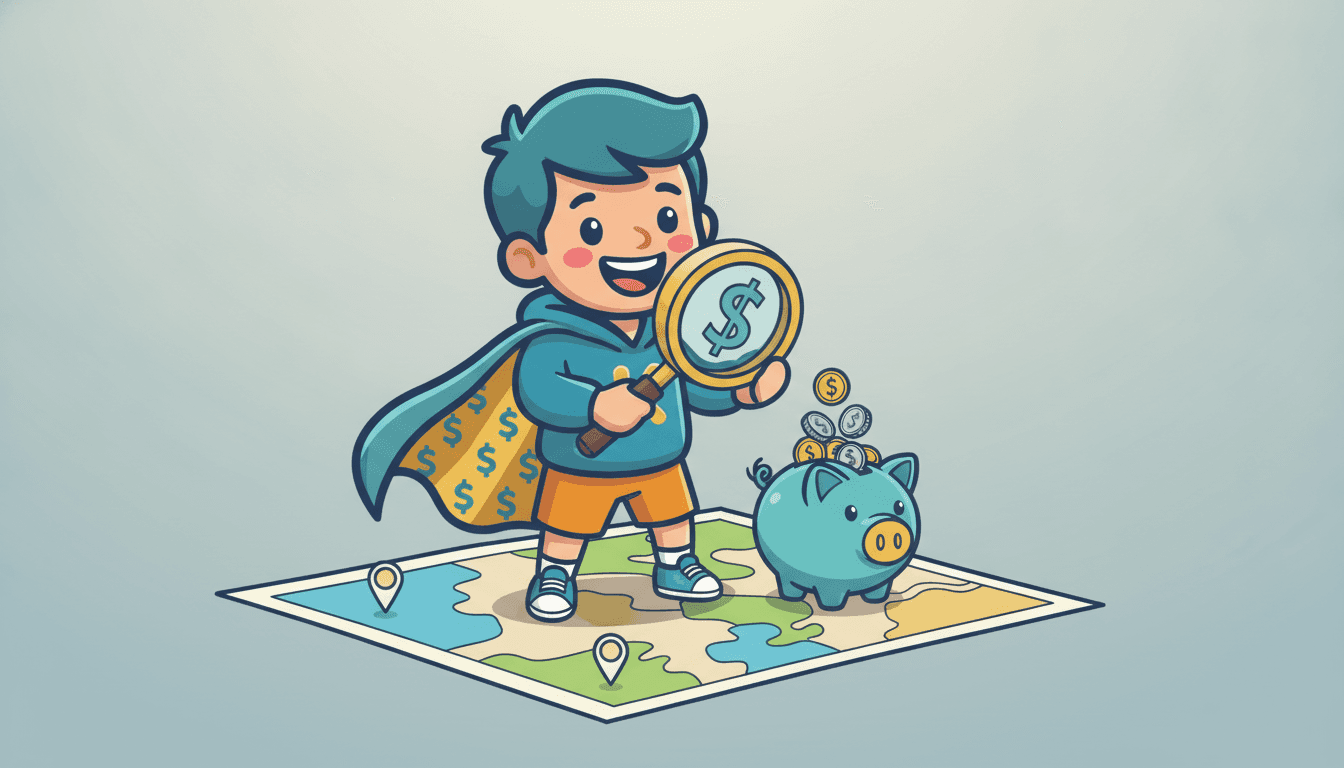
Mapping Your World: Why Sharing Matters (Even Data!)
Learn how contributing to shared maps like OpenStreetMap helps everyone, and how shared resources save us money.
Inspired by: Make your first edit to OpenStreetMap
Did you see the buzz on Hacker News today about "Make your first edit to OpenStreetMap"? It might sound super techy, but it's actually about something really cool that impacts all of us: maps! Not just any maps, but maps made by regular people, for regular people. Think of it like a giant, worldwide puzzle where everyone gets to add a piece.
What's OpenStreetMap, Anyway?
You know how you use Google Maps or Apple Maps to find your way to a friend's house, or to see where the nearest ice cream shop is? OpenStreetMap is kind of like that, but with a big difference: it's built by volunteers. People all over the world contribute information – where a new park entrance is, if a road is closed, or even the best walking path to school. And it's all free for anyone to use!
The Power of Sharing (and Saving!)
So, what does this have to do with money for kids? A lot, actually!
Imagine if every time you wanted to use a map, you had to pay for it. Or if every town had to pay a huge company to create its own map from scratch. That would be super expensive, right? OpenStreetMap shows us the power of sharing resources.
When people contribute their knowledge and time to build something together, like a free map, it benefits everyone. Companies, app developers, and even emergency services can use OpenStreetMap data without paying huge fees. This means they can save money, which can then be passed on to you through lower prices for apps, or better services from your town.
Think about it like this:
- Sharing Toys: If you and your friends all bring a different toy to play with, you have way more options than if everyone just played with their own toy separately. And nobody had to buy all the toys!
- Community Garden: If everyone in a neighborhood pitches in to plant and care for a community garden, everyone gets to enjoy fresh vegetables. It's much cheaper and more fun than everyone trying to grow a full garden by themselves.
- Public Libraries: Libraries are a fantastic example of a shared resource. Instead of buying every single book you want to read, you can borrow them for free. Your tax dollars (or your parents' tax dollars) help fund the library, and everyone gets to benefit from a huge collection of books, movies, and even computer access.
OpenStreetMap is like a digital public library for geographic information. Everyone contributes, and everyone benefits, saving money for countless individuals and organizations.
Your Role in a Shared World
Even as a kid, you participate in shared resources all the time. Your school is a shared resource, your local park is a shared resource, and even the sidewalks you walk on are shared! Understanding how these things work – and how contributing to them, even in small ways, helps everyone – is a big part of being financially smart.
When you take care of public property, when you share your ideas in a group project, or even just when you help a friend, you're contributing to a better, more efficient world. And often, efficiency and cooperation lead to saving money for everyone involved.
So, the next time you use a map, or visit a park, remember the power of shared resources. When we work together and share, we can create amazing things that benefit everyone, often for free or at a much lower cost than if we tried to do it all alone.
P.S. This week, talk with your child about a shared resource you both use regularly – maybe a park, a library, or even a streaming service your family shares. Discuss how everyone contributing (whether through taxes, membership fees, or simply taking care of the resource) makes it better for all.
Stay in the loop
We ship new free guides, printables, and the occasional deal — roughly twice a month. No spam, unsubscribe anytime.
Three streams available: 30-day welcome series, biweekly newsletter, and (opt-in) daily blog posts. Pick which you want after signing up. One click to unsubscribe from any.